Exhibition
Raymond Saunders: Flowers from a Black Garden at Carnegie Museum of Art
Carnegie Museum of Art presents Raymond Saunders’s first major museum solo, Flowers from a Black Garden, through July 13, 2025.
By Unjica Editorial
Pittsburgh audiences arriving at the Carnegie Museum of Art this spring may find Raymond Saunders (b. 1934) unfamiliar despite his decades of influence in American painting. Museum director Eric Crosby has acknowledged that even he knew little of Saunders when he moved to Pittsburgh in 2015—yet Saunders is hardly an emerging figure. A Rome Prize fellow in 1964, Guggenheim fellow in 1976, and two-time National Endowment for the Arts grantee (1977, 1984), he has work in the collections of the National Gallery of Art, The Met, MoMA, the Whitney, SFMOMA, and the Carnegie itself.
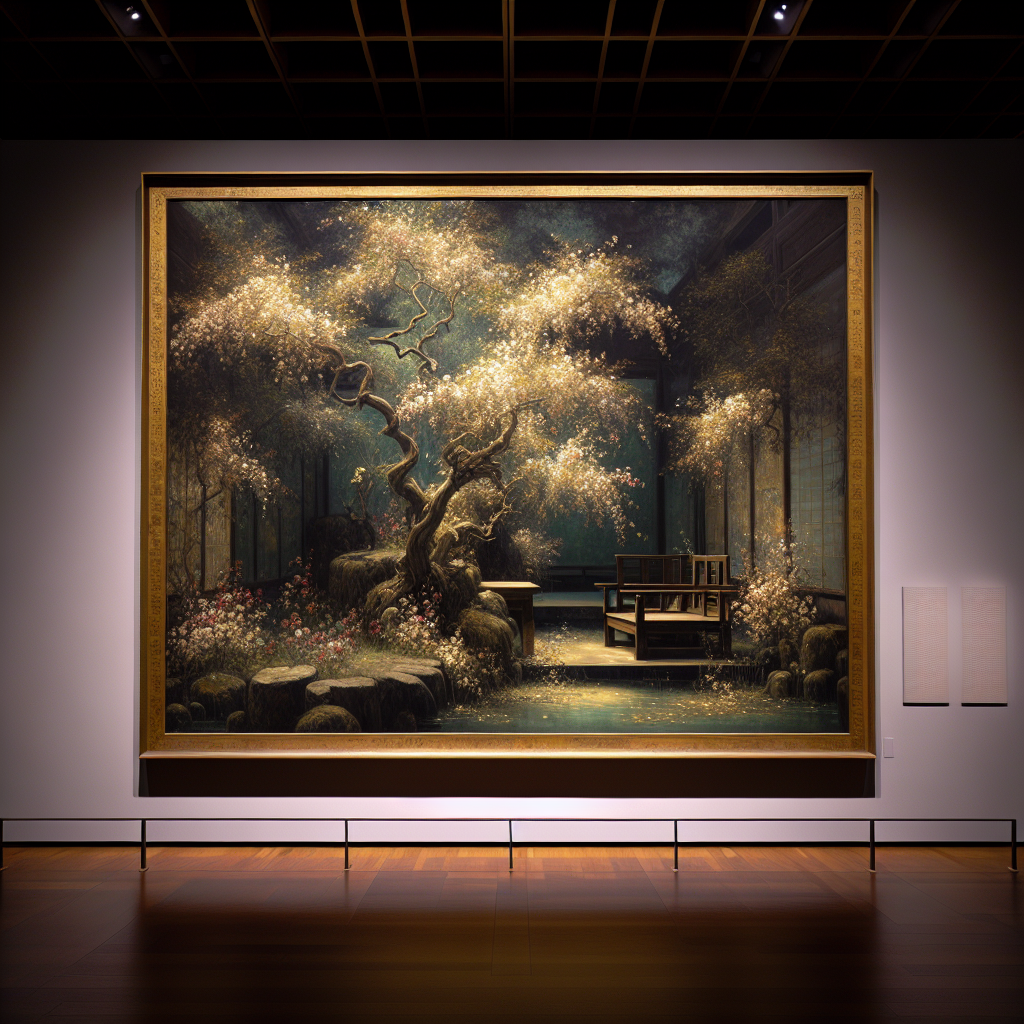
**Raymond Saunders: Flowers from a Black Garden**, on view through July 13, 2025, is the Oakland-based artist’s first solo exhibition at a major museum and the deepest institutional look at his practice to date. Crosby curated the show personally—a rarity for a museum director—motivated by Saunders’s lifelong ties to Pittsburgh and to the Carnegie’s education programs. As a child Saunders attended the museum’s Saturday art classes under Joseph C. Fitzpatrick, who also taught Andy Warhol, Philip Pearlstein, and Mel Bochner. Saunders later studied at what is now Carnegie Mellon University before earning an MFA from California College of Arts and Crafts in 1961 and settling in the Bay Area, where he taught and maintained a studio far from New York’s market centers.
The exhibition’s thirty-five works, some spanning sixteen feet, reveal an artist who treats painting as ongoing process rather than finite product. Crosby notes that Saunders “never really had an inclination to ever finish a work, formally,” returning repeatedly to canvases to add, scrape, or collage elements—including drawings by children pasted onto surfaces. Flowers recur as motif and metaphor: “For me, the importance of flowers is around the possibility of beauty and love within the pictures,” Crosby said. Saunders himself used the phrase “flowers from a black garden” to describe earlier shows and individual paintings.
Formal strategies echo Saunders’s seminal 1967 essay **Black Is a Color**, which argued for expansive freedom for Black artists beyond narrow expectations of protest imagery. Large black grounds suggest blackboards; urban experience, jazz, education, pop culture, and autobiographical Pittsburgh references layer with materials that reward sustained looking. The work is not overtly didactic, yet it emerged from Oakland in the late 1960s and early 1970s amid Black Power and anti-war activism.
“What struck me most, and what continues to strike me most about the work, is the degree of ambition that it holds,” Crosby told *Forbes*. Saunders, now ninety, offers Pittsburgh a homecoming that doubles as art-historical correction: a painter who refused the gallery game on New York’s terms, but never left the museum that taught him how to see.
modern artart digestexhibition
Sources
Unjica did not independently report this story. The details above summarize published reporting and are attributed to the original sources.
- Forbesforbes.com
About the author
Unjica Editorial
Curated art news and analysis from the Unjica editorial team.
Reader response
Comments (0)
Share your thoughts on this piece. Thoughtful, art-focused discussion is welcome.
A
No comments yet. Be the first to respond to this artwork.