Exhibition
Picasso's Dublin Return: A Masterpiece Exhibition
Picasso: From the Studio opens at the National Gallery of Ireland after three years of planning, with loans from Musée national Picasso-Paris.
By Unjica Editorial
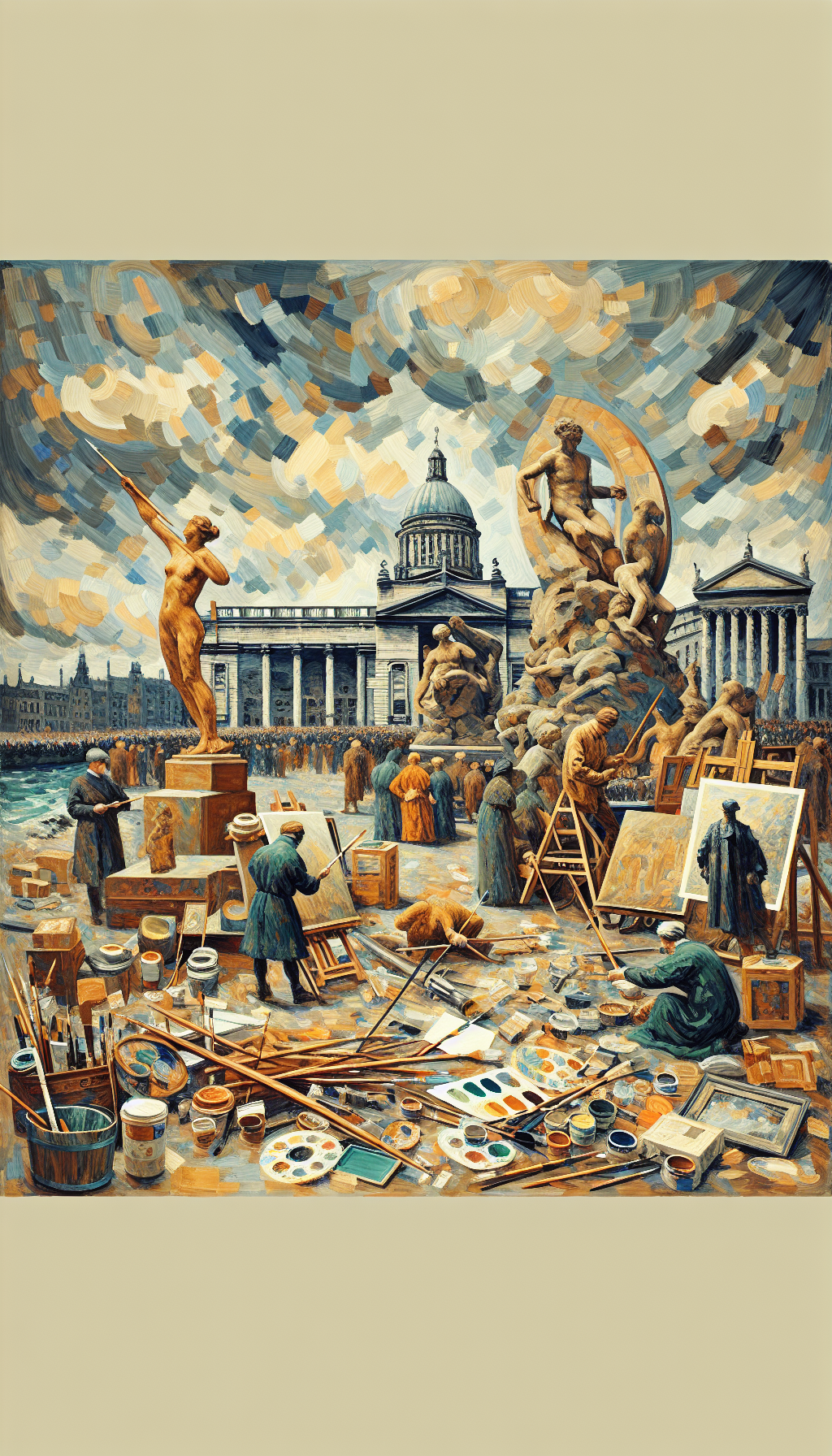
**Picasso: From the Studio**, a collaboration between the National Gallery of Ireland (NGI) and the Musée national Picasso-Paris, opened in Dublin on October 9, 2025, and runs through February 22, 2026. For curator of modern art Janet McLean and her colleagues, the presentation culminates more than three years of planning—and invites comparison with an improbable precedent: in 1969, Trinity College students mounted Dublin’s first Picasso exhibition from a library storage room, drawing roughly 42,000 visitors over the summer.
McLean has described the student-led 1969 show, which displayed 97 works across painting, ceramics, prints, and drawings, as a feat she still finds difficult to comprehend given the logistical demands of the new project. *Picasso: From the Studio* is the first comparable survey in Ireland since that moment. Organized with Joanne Snrech of the Paris museum, it tracks Picasso’s life as an artist in France from 1913 until his death in 1973, with nearly all loans coming from the Musée national Picasso-Paris.
Rather than isolating signature motifs, the exhibition foregrounds studios themselves—the rooms where works were made, stored, displayed to visitors, and photographed. NGI director Caroline Campbell has called the show “intimate,” offering “a chance not just to get into his mind but his being, the spaces where the art was made and how the works were put together.” Jean Cocteau’s quip that Picasso was “the king of scavengers” finds visual form in the artist’s habit of accumulating materials and rearranging possessions when photographers arrived.
The narrative spans Montmartre garrets, the vast Paris attic where Dora Maar documented the making of *Guernica*, La Californie near Cannes—recalled in Picasso’s 1956 painting *The Studio at La Californie*—and Notre-Dame-de-Vie in Mougins, where he painted *Musician* in 1972. Curators highlight entangled relationships inscribed in these rooms, from Marie-Thérèse Walter’s portrait displayed altar-like during *Guernica*’s creation to familial scenes with Claude and Paloma after Picasso’s split from Françoise Gilot.
The NGI owns only one Picasso painting, *Still Life with a Mandolin* (1924), painted in Juan-les-Pins after the artist compensated a landlord for murals painted on a garage wall. For this loan-heavy exhibition, scores of paintings, sculptures, ceramics, works on paper, photographs, and films travel from Paris. Tickets are priced from €0 to €16; the show occupies the Beit Wing, Rooms 6–10.
Fifty-six years after Trinity’s basement experiment, Dublin again stages Picasso at institutional scale—this time with a single-lender partnership that McLean has said streamlines an otherwise labyrinthine negotiation process.
modern artart digestexhibitionsculptureartist
Sources
Unjica did not independently report this story. The details above summarize published reporting and are attributed to the original sources.
- National Gallery of Irelandnationalgallery.ie
- The Art Newspapertheartnewspaper.com
- Irish Independentindependent.ie
About the author
Unjica Editorial
Curated art news and analysis from the Unjica editorial team.
Reader response
Comments (0)
Share your thoughts on this piece. Thoughtful, art-focused discussion is welcome.
A
No comments yet. Be the first to respond to this artwork.