Exhibition
Rashid Johnson’s A Poem for Deep Thinkers Fills the Guggenheim Rotunda
Rashid Johnson’s largest solo show to date spans 90+ works at the Guggenheim through Jan 18, 2026, with rotunda programming.
By Unjica Editorial
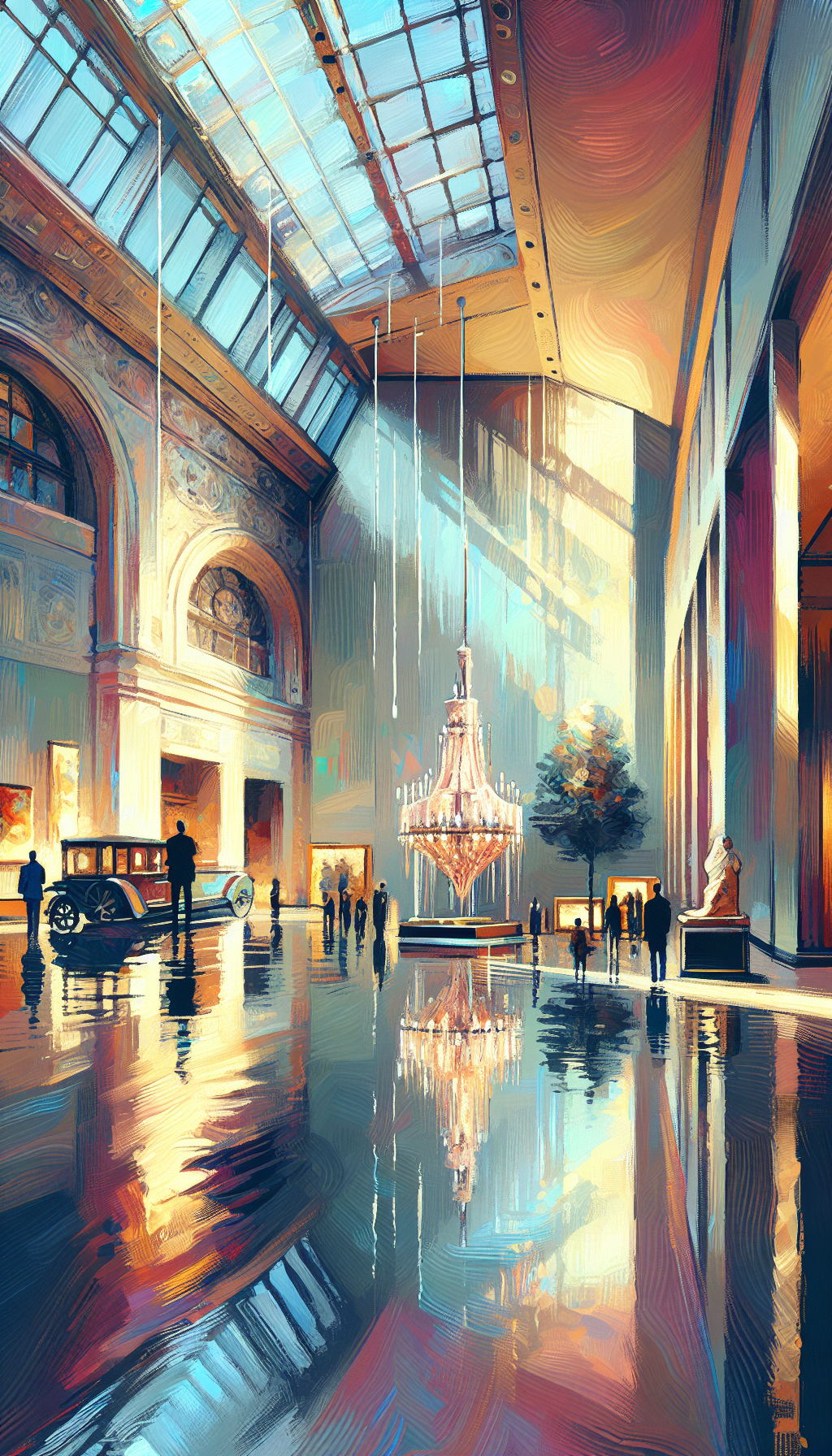
**Rashid Johnson: A Poem for Deep Thinkers**, on view at the Solomon R. Guggenheim Museum in New York through January 18, 2026, is the artist’s largest solo exhibition to date—and one that treats Frank Lloyd Wright’s spiraling architecture as an active collaborator. Opened April 18, 2025, the survey gathers more than ninety works spanning painting, sculpture, text, film, and installation, including pieces made specifically for the museum.
Johnson, who has shown at the Guggenheim multiple times before, uses the ramp to trace continuities and ruptures across two decades of practice. Canvases such as **God Painting ‘The Spirit’** (2025) pair abstraction with uncanny circular forms against saturated color, while **Untitled Anxious Audience** (2019) compresses faces into strained, collective expressions. Earlier photographs and assemblages revisit questions of Black identity and cultural reference: **Self Portrait laying on Jack Johnson’s Grave** (2006) honors the first Black American heavyweight champion to defeat James J. Jeffries in 1910, and **The Crisis of the Negro Intellectual (The Power of Healing)** (2008) riffs on Harold Cruse’s 1967 book through stacked, painted domestic objects.
At the center of the presentation is a new mosaic installed on the rotunda floor, accompanied by **Rotunda Stage**, a platform for recurring public programs. Friday through Monday, the stage hosts collaborations with the Academy of American Poets, DreamYard, Harlem School of the Arts, Urban Word NYC, poet-in-residence Traci Brimhall, and others. Programming to date has included jazz performances, student poetry, and readings by Rad(ical) Poetry Consortium fellows—extending the exhibition’s title from gallery object to live utterance.
Johnson described the project in terms of mobility across form rather than loyalty to any single medium: “This exhibition continues the conversation I’ve always been invested in: one that allows for freedom of expression and awareness of artistic possibilities,” he said in a statement. “For me, medium specificity has never been the goal—it’s about how the project can move freely between different forms.”
Critics and visitors have noted how ascending and descending the ramp reframes scale: hanging plants, spray-painted texts, and monumental sculptures appear in shifting proximity, turning the museum’s signature spatial drama into a spatial poem. For Johnson, the Guggenheim setting amplifies what his work has long argued—that Black intellectual life, anxiety, humor, and material experimentation belong at the center of contemporary art’s public conversation, not at its margins.
modern artart digestexhibitionmuseum
About the author
Unjica Editorial
Curated art news and analysis from the Unjica editorial team.
Reader response
Comments (0)
Share your thoughts on this piece. Thoughtful, art-focused discussion is welcome.
A
No comments yet. Be the first to respond to this artwork.