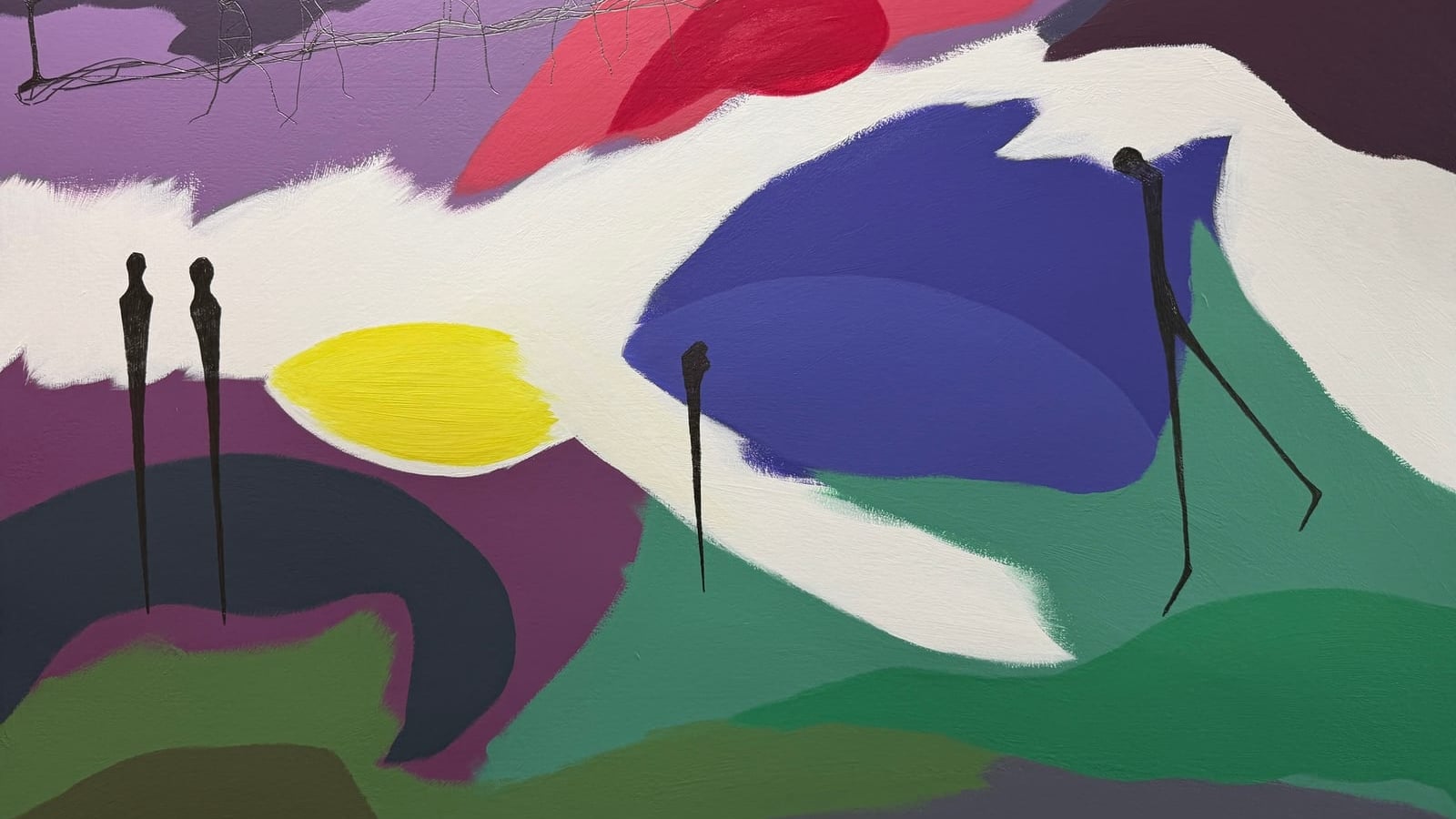
What makes the work hold attention is not a single signature motif but a way of letting forms arrive and refuse to settle. Figures, colours, lines, and residual marks meet and disperse. The visible and the unnamed share the same field. His paintings, as his exhibition statement puts it, do not interpret or resolve what lies between those registers; they leave room for presence to remain as it is.
Materials, gesture, and the space between abstraction and representation
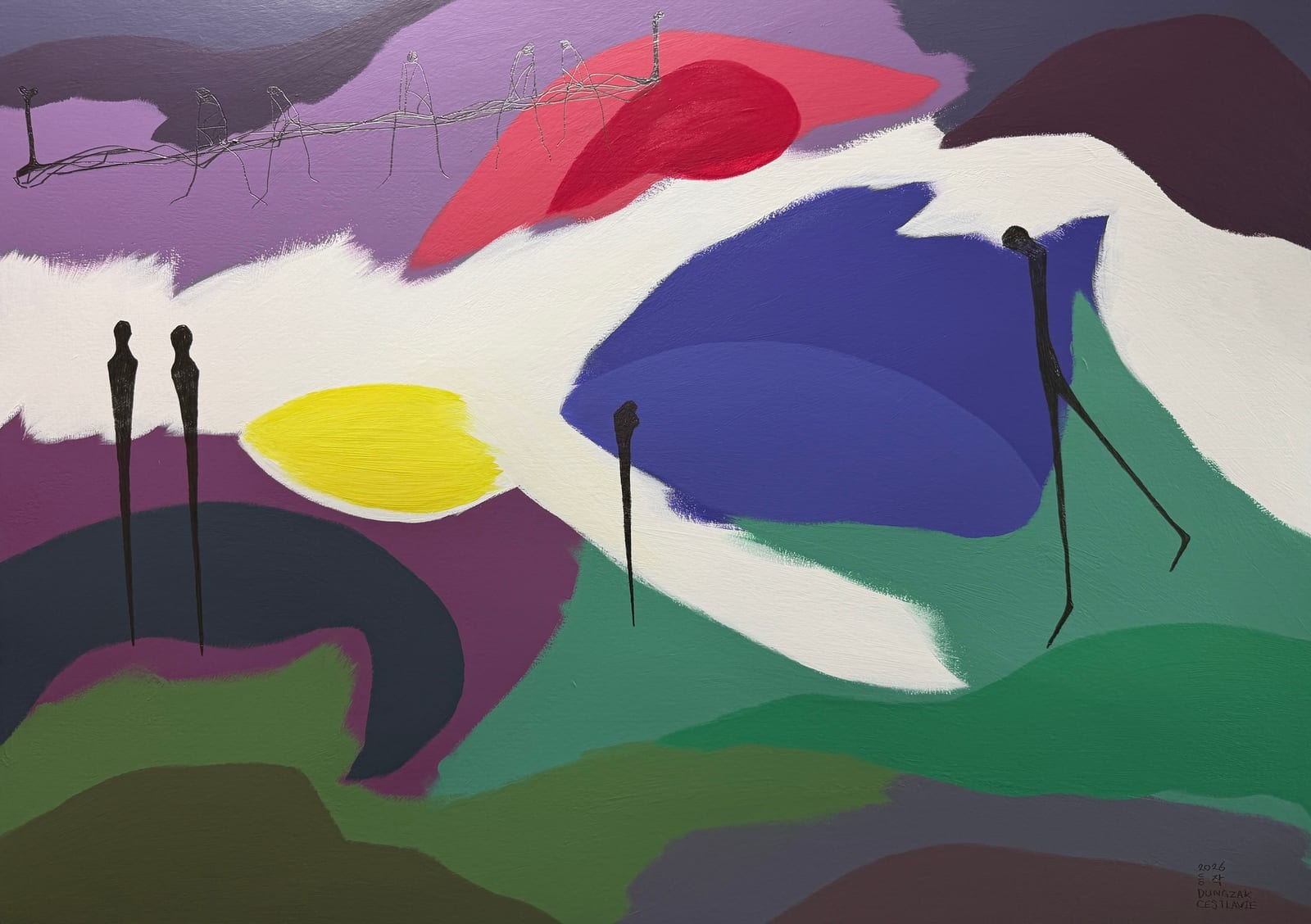
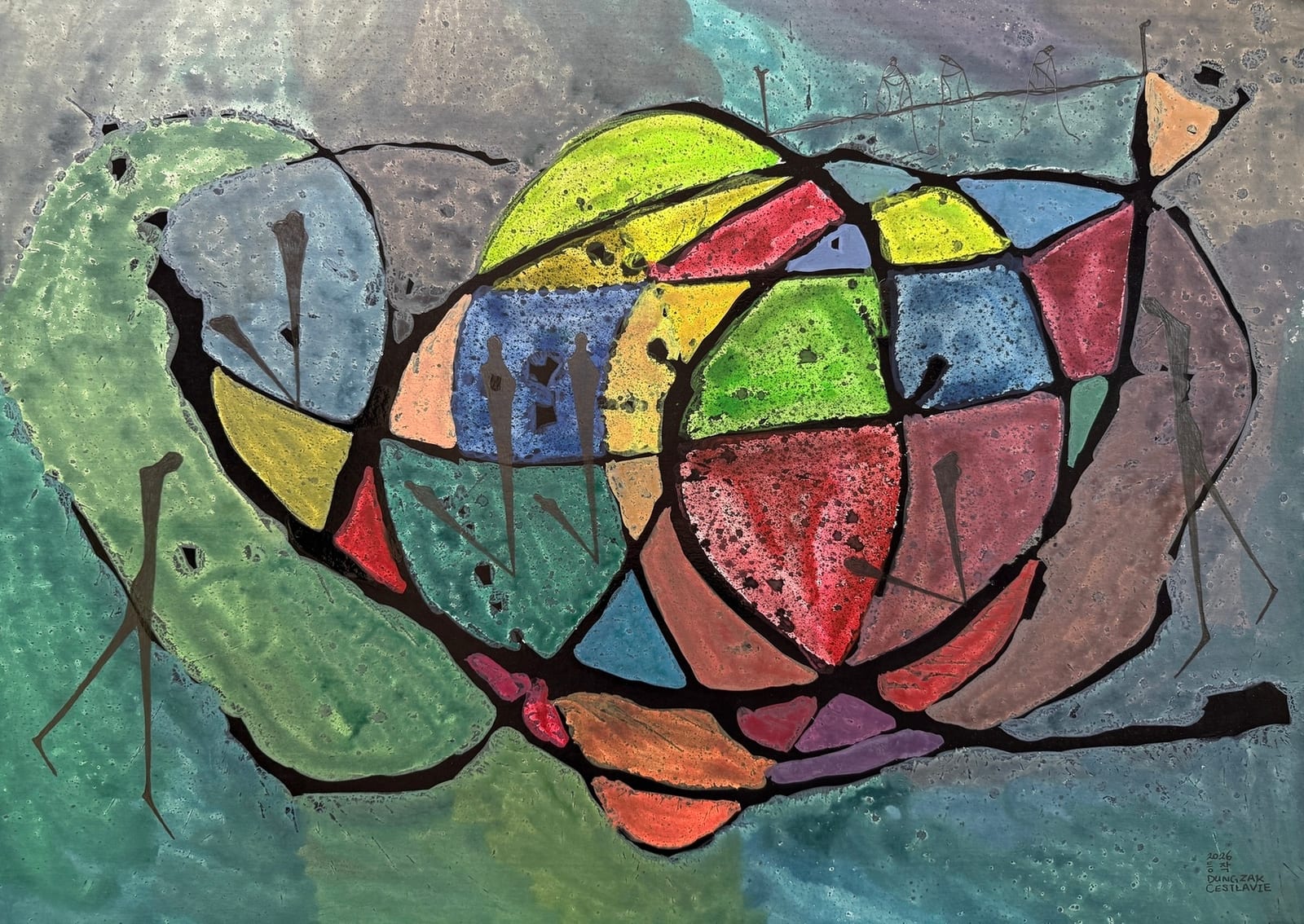
His media move between two main supports. On canvas he works in acrylic, often at substantial scale. On paper he combines India ink, watercolour, acrylic, and pencil, building surfaces that feel both drawn and washed. Across both, line records movement and duration as much as contour. Colour behaves less like local description than like weather: layered pigments, concentrated darkness, irregular shapes, and open passages set tension against balance.
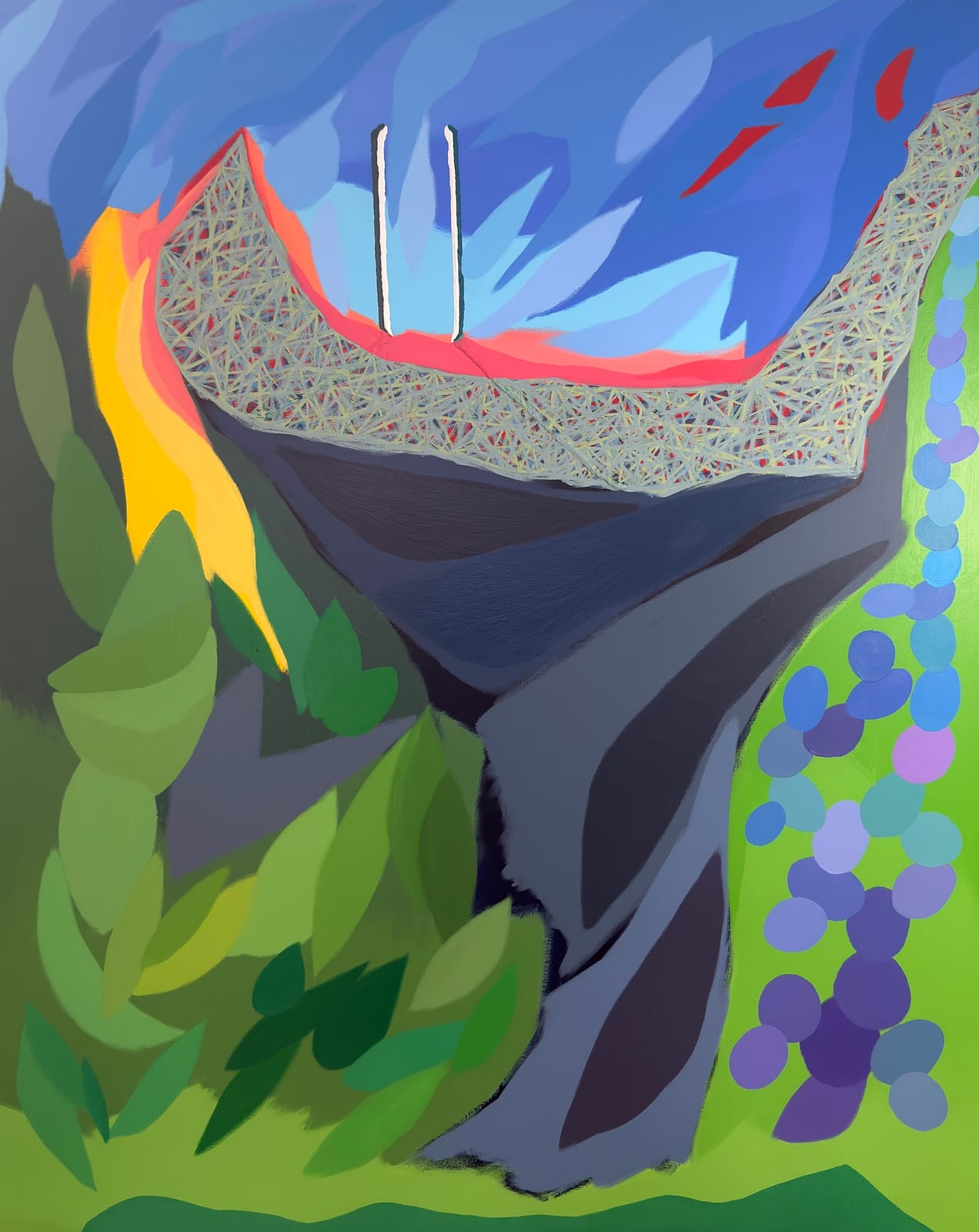
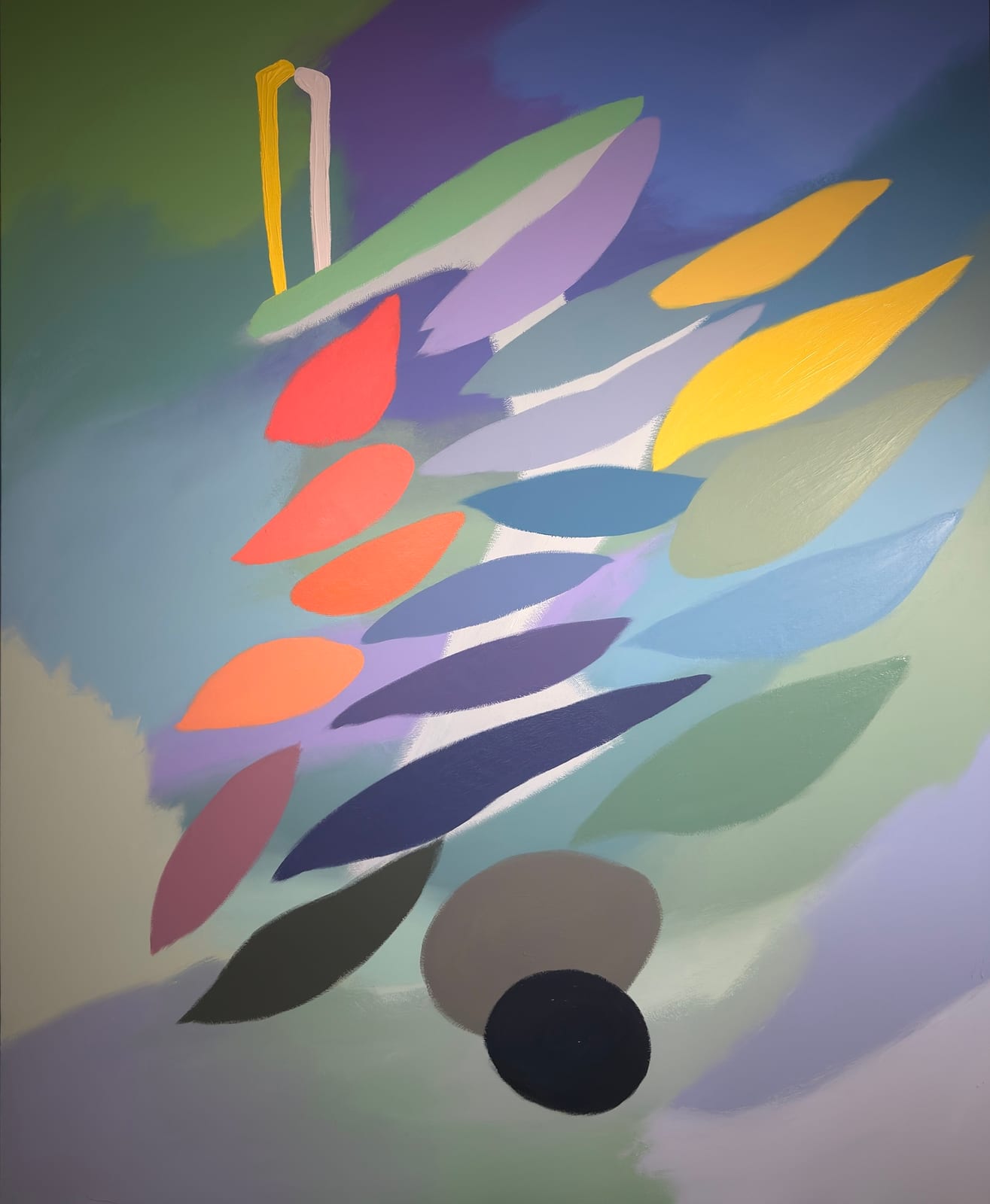
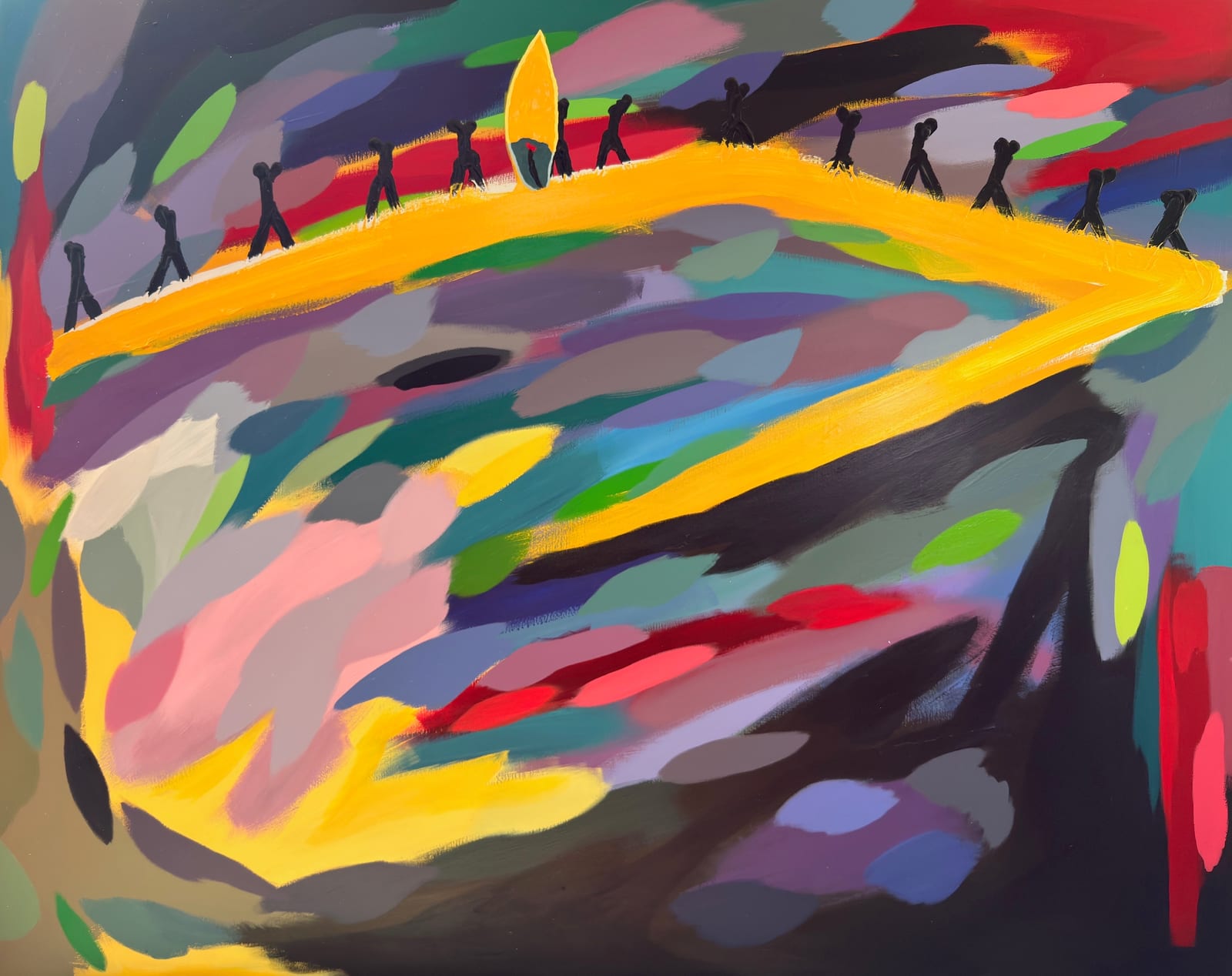
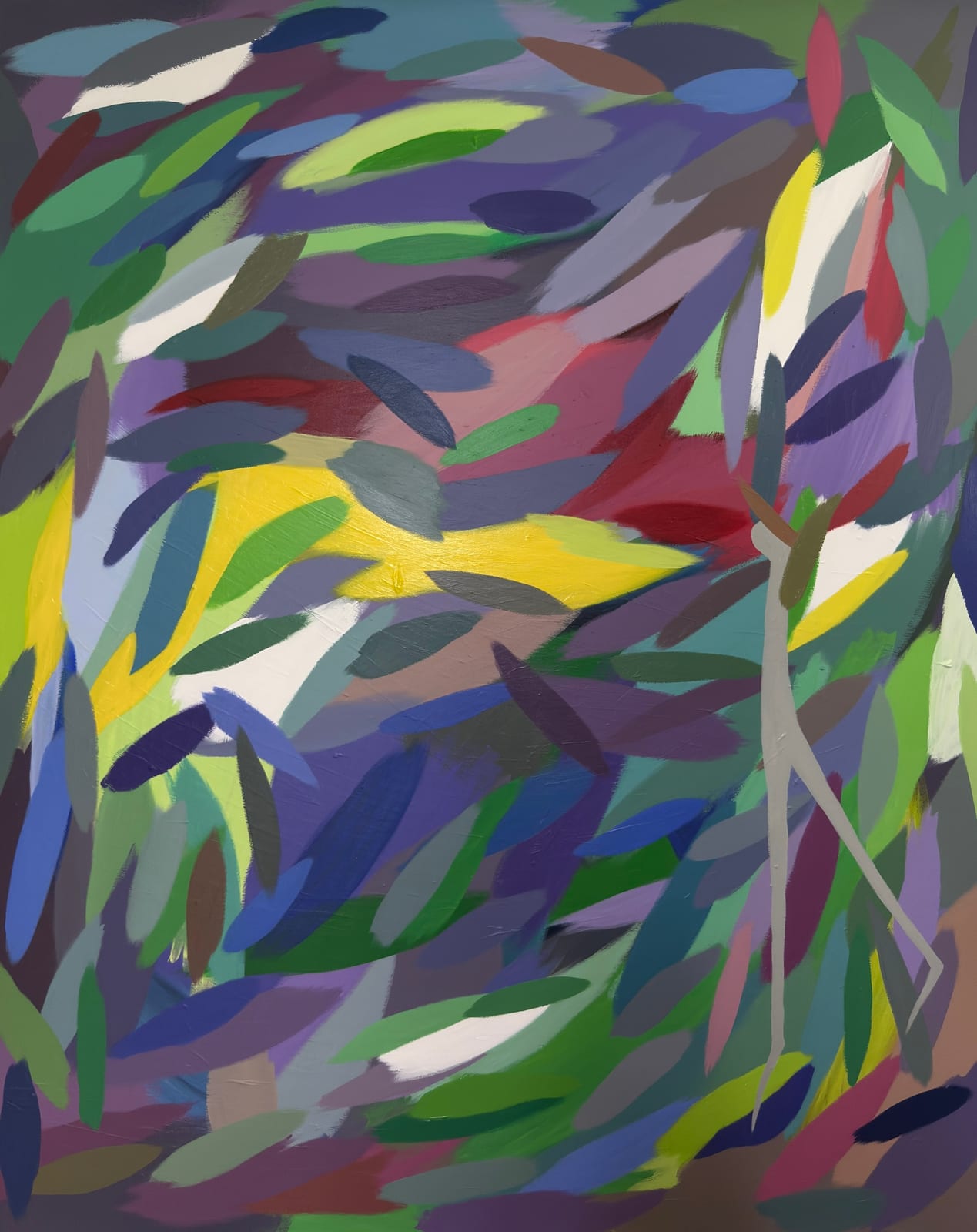
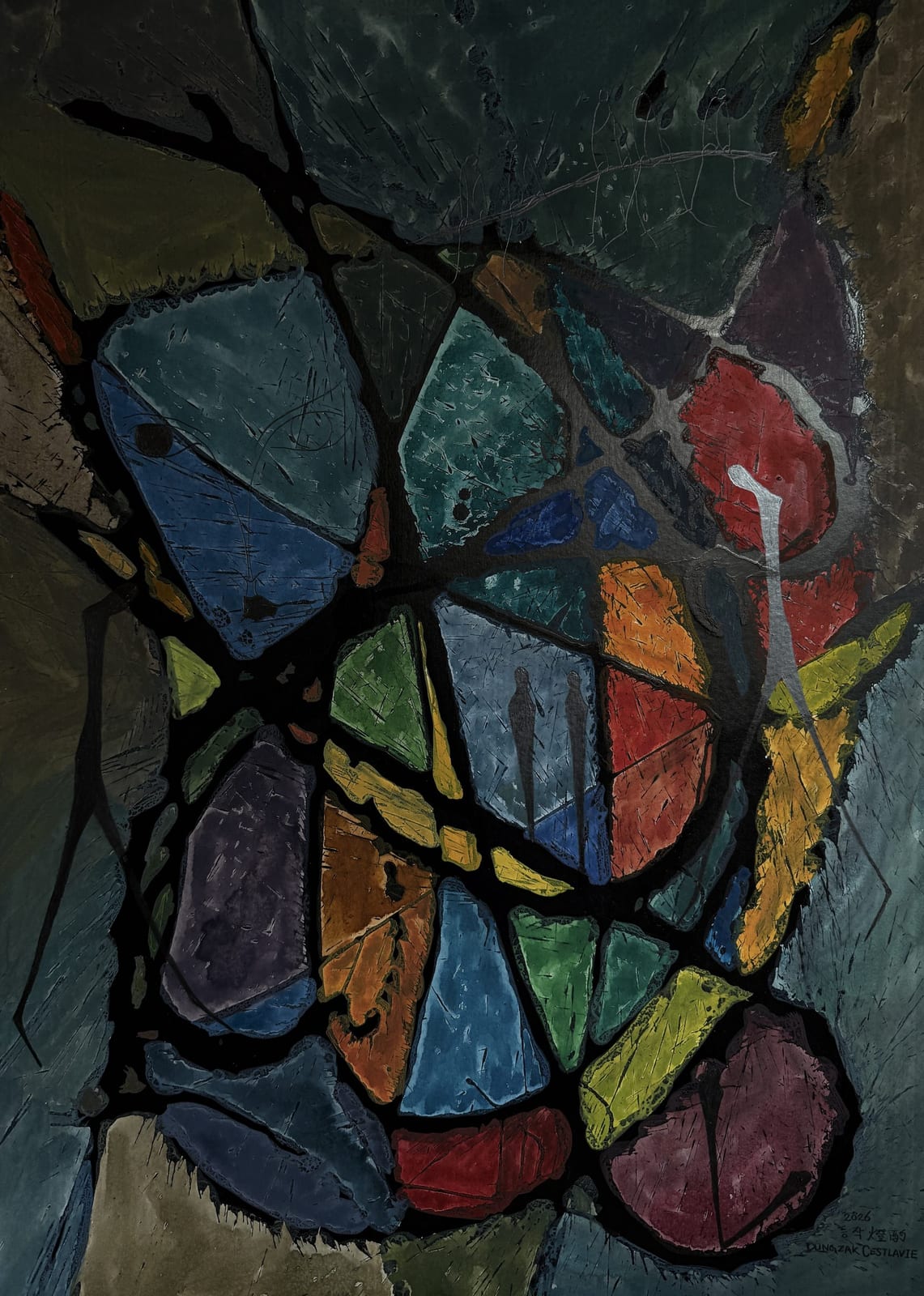
That balance keeps the pictures between abstraction and representation. A shape may suggest a figure, a landscape fragment, or a remembered gesture, then drift back toward pure relation. Images emerge, overlap, and reappear. The point is not ambiguity for its own sake. It is a refusal to reduce experience to one stable identity or a tidy narrative. In "The Being Begins to Move" (2026) and "Love endures, carrying breath within" (2026), acrylic on canvas holds that mobility at large format. On paper, works such as "Becoming Light for One Another" and "To Be Each Other's Light" (both 2026) thin the same questions into ink, watercolour, and pencil—quieter registers, no less insistent.
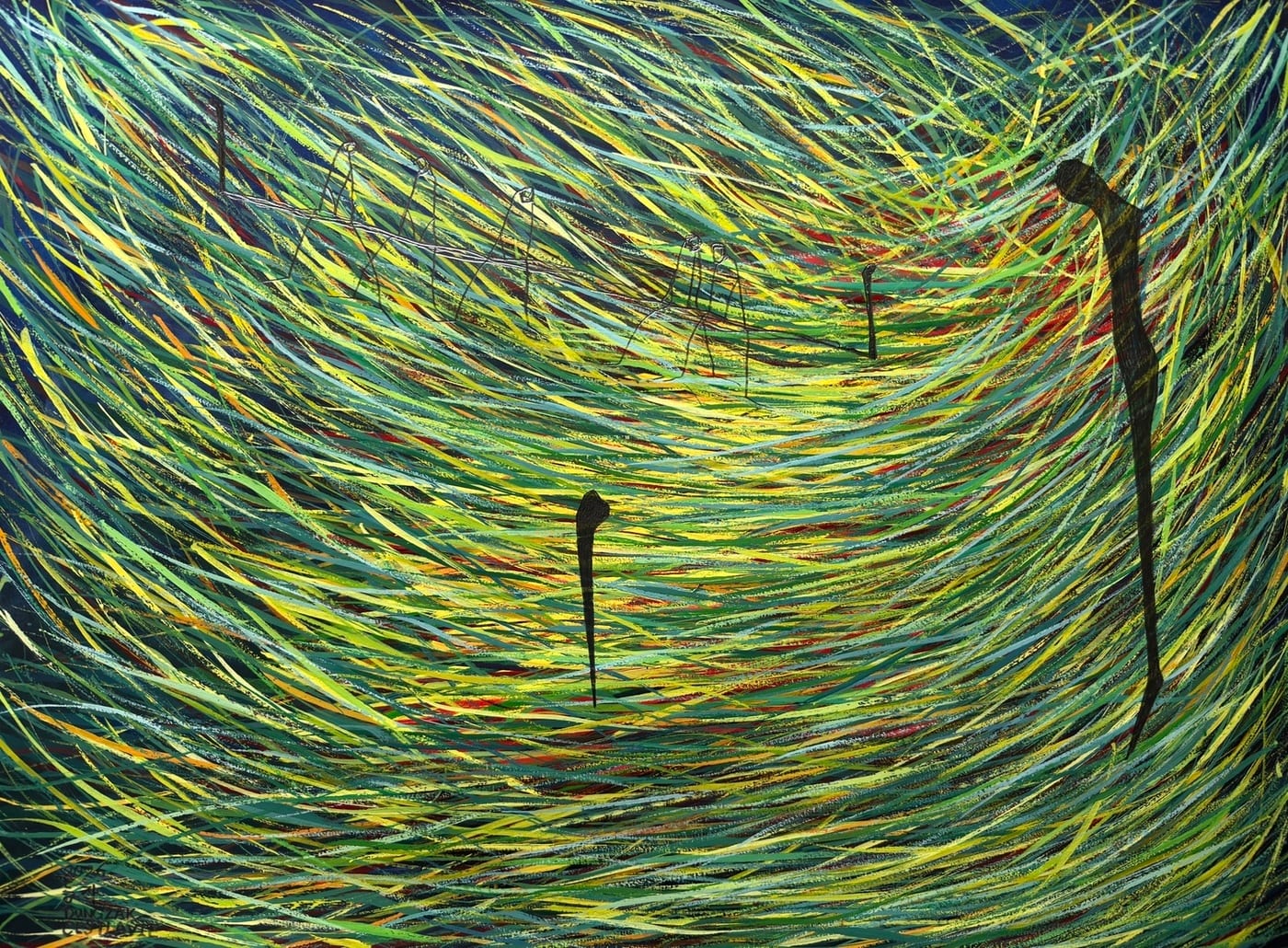
Memory, light, solitude, and shared vulnerability
In his framing, light is more than illumination. It is a condition through which life becomes perceptible. Memory is not a storage drawer for the past; it actively remakes the present. Solitude, likewise, is not cast as isolation alone. His statement describes solitude as a place where people may recognise both difference and shared vulnerability—connection that can arise from acknowledging what stays uncertain or unspoken.
Those ideas surface in titles that read almost like short prayers or propositions: "Tears Contain the Universe: Pray for Us" (2025); "Our Solitudes, Different Yet Alike" (2026); "Our Sorrows Are Alike, Yet Our Tears Flow Differently" (2026); "I Want to Live" (2026). Prayer and humanity appear as recurring concerns without collapsing into simple religious illustration. Compassion and suffering sit beside the possibility of contact between lives that never fully coincide. "The Hues of Our Hearts" (2026) carries related emotional weather at canvas scale, while the paper works tighten the same vocabulary into denser, more intimate marks.
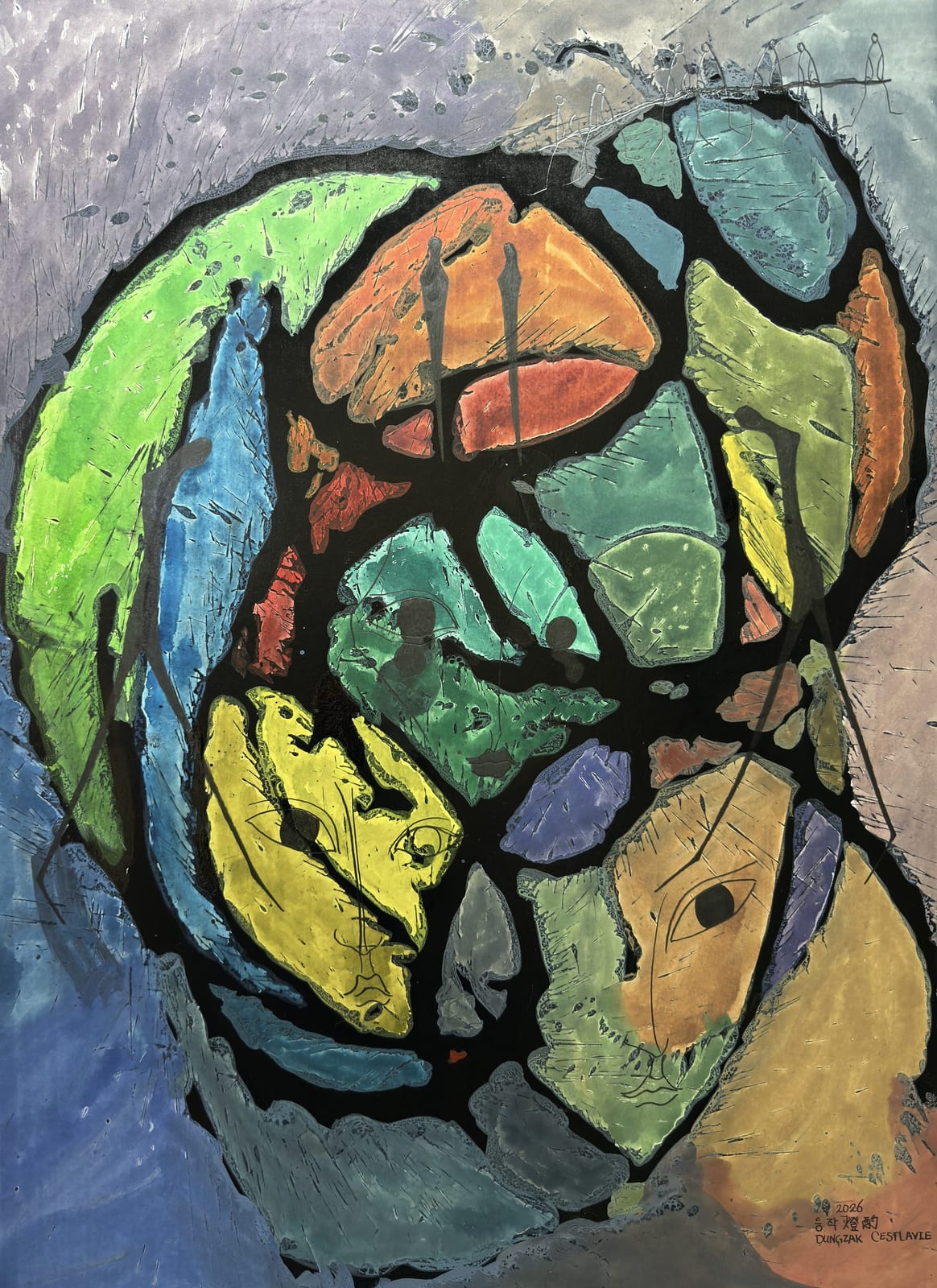
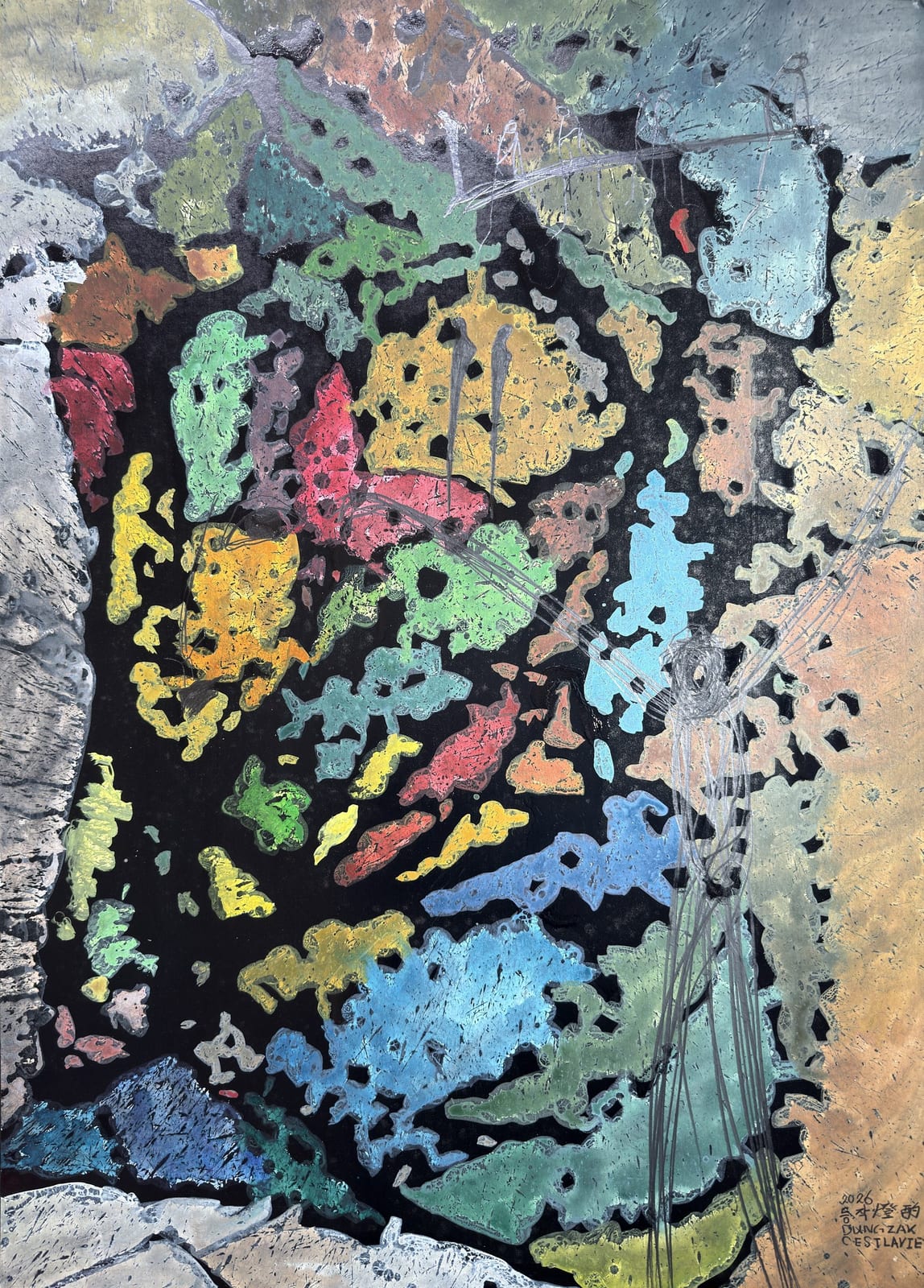
Existence Needs No Proof: the 30th solo exhibition
According to the artist’s supplied documentation, his 30th solo exhibition, Existence Needs No Proof, was held from 1 to 30 September 2026 at NAURY Art Center & Gallery in Seoul (L Floor, Naury Building; 9, Seocho-daero 55-gil, Seocho-gu). The show gathered philosophical questions that have shaped his practice for more than three decades: painting approached not as proof of life, but as a place where life may be encountered without the demand for justification.
The ten works reproduced here—drawn from 2025–2026 and provided by the artist with captions and archival image links—are a curated selection from his practice. They illustrate the range of his recent canvas and paper work; they are not presented as a complete checklist of every work shown in the September 2026 exhibition. Further context is available on dungzak.art and in the artist’s ARCHIVE PRO edition at dungzaklab.art/app.
Among contemporary artists working in painting, DUNGZAK CESTLAVIE stays close to felt experience without forcing a single explanation. Existence, in his formulation, needs no proof. The pictures ask for attention instead—and leave the rest of the argument to the viewer.
Image credit. Artwork images © DUNGZAK CESTLAVIE. Reproduced with the artist’s non-exclusive permission for this Unjica editorial feature and for social-media posts promoting it (artist correspondence with Unjica Editorial, November 2026). Permission does not extend to unrelated commercial use, sale, or redistribution.
Sources
DUNGZAK CESTLAVIE — Official website
Artist-supplied exhibition documentation and selected-works index for Existence Needs No Proof, 30th solo exhibition, NAURY Art Center & Gallery, Seoul, 1–30 September 2026 (PDF and email correspondence with Unjica Editorial, November 2026).
ARCHIVE PRO — Original Artist Edition